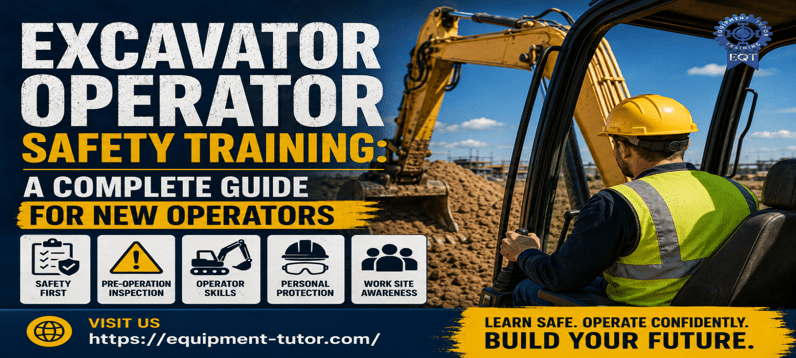
Excavator Operator Safety Training: A Complete Guide for New Operators
Operating an excavator is one of the most in-demand skills in the construction and heavy equipment industry. But it is also one of the most dangerous jobs on any job site — if you are not properly trained. Excavator operator safety training is not optional. It is the foundation of every safe, productive dig. Whether you are just starting or stepping into the cab for the first time professionally, this guide covers everything you need to know before you operate.
Why Excavator Safety Training Matters
Excavators are powerful machines. A standard unit can weigh anywhere from 10 to 100 tonnes and generate an enormous force with every movement. One mistake — a miscalculated swing, an unstable surface, an unmarked utility line — can result in serious injury, equipment damage, or worse.
Excavator operator safety training exists to prevent exactly that. It gives new operators the knowledge, skills, and confidence to work safely before they ever face a real-world hazard. Platforms like Equipment Tutor are built around this very principle — making structured, accessible training available to operators at every stage of their career.
Under OSHA standards (29 CFR 1926.602), employers are legally required to ensure that operators are trained and competent before operating earthmoving equipment. That is not just a regulation — it is a baseline for protecting lives.
What Does Excavator Operator Safety Training Cover?
A well-structured training program goes well beyond learning how to move a bucket. Here is what comprehensive excavator operator safety training should include:
1. Machine Familiarization
- Understanding the cab controls, hydraulic systems, and attachments
- Learning the operating limits of the specific machine
- Identifying all emergency shutoff features and safety locks
2. Pre-Operation Inspections
- Checking track tension, hydraulic fluid levels, and structural integrity
- Inspecting the boom, arm, and bucket for wear or damage
- Verifying ground conditions and stability before starting work
3. Safe Operation Techniques
- Understanding the machine’s center of gravity and load limits
- Correct swing and positioning on slopes or uneven terrain
- Maintaining safe distances from edges, trenches, and overhead hazards
4. Hazard Awareness
- Identifying underground utilities before digging
- Recognizing signs of soil instability and cave-in risk
- Managing the working zone and keeping personnel clear
5. Shutdown and Securement Procedures
- Grounding the bucket at the end of the shift
- Engaging safety locks and securing the machine
- Completing post-operation checklists
Each of these areas directly reduces the risk of the most common excavator accidents — tip-overs, utility strikes, and trench cave-ins.
Equipment Operator Training: What the Certification Process Looks Like
Equipment operator training for excavators typically combines classroom instruction, simulator practice, and hands-on seat time. Here is what the general process looks like for new operators:
- Classroom instruction: Covers OSHA regulations, machine theory, load charts, and safety protocols
- Simulator training: Builds muscle memory and control skills in a zero-risk environment
- Hands-on evaluation: Operators demonstrate precision digging, trenching, loading, and shutdown under direct supervision
- Written assessment: A theory test covering safety rules, hazard identification, and operating procedures
- Certification: Successful candidates receive a certificate of completion and a wallet card, which can be presented to employers as proof of training
Some programs are as short as two weeks. Others are more intensive, depending on the depth of instruction and how many machine types are covered. Either way, the goal is the same: to produce operators who can work safely from day one.
Workplace Heavy Equipment Safety Training: The Employer’s Responsibility
Safety is not just the operator’s job. Workplace heavy equipment safety training is a shared responsibility between operators and the companies that deploy them.
Employers in the construction, transport, and infrastructure industries are legally obligated to:
- Ensure every operator is trained before operating equipment on-site
- Document training records and keep them accessible
- Provide site-specific hazard briefings before work begins
- Conduct regular refresher training — most industry standards recommend every three years
- Carry out equipment inspections before each shift and address faults immediately
Companies that have built their reputation on safety and compliance in heavy equipment operations understand this well—and so does Equipment Tutor, which supports both individual operators and employers in meeting their training obligations.
Workplace heavy equipment safety training programs also cover the following:
- How to act as a spotter and keep co-workers safe around operating machinery
- Communication protocols between operators and ground crew
- Emergency response procedures in the event of an incident
Common Mistakes New Excavator Operators Make and How Training Prevents Them
Even motivated new operators can fall into avoidable habits. Here are the most common errors and how proper training addresses each one:
- Skipping the pre-op inspection: Training builds inspection habits as routine, not optional
- Misjudging the swing radius: Classroom and simulator work reinforces awareness of the working zone
- Operating on unstable ground: Hazard recognition modules teach operators to assess and respond before digging
- Overloading the bucket: Load chart training ensures operators stay within safe capacity limits
- Failing to secure the machine at shutdown: Securement procedures are evaluated during hands-on certification
Each of these mistakes has caused real incidents on real job sites. Training is what closes the gap between enthusiasm and competence. Resources like Equipment Tutor break down each of these modules in a way that is easy to follow.
Who Should Prioritize Excavator Operator Safety Training?
If your work involves excavators — even occasionally — formal excavator operator safety training is not something to skip or delay. The stakes are too high and the regulations too clear to leave it to chance.
- New operators entering the construction or earthmoving industry for the first time.
- Experienced labourers transitioning into equipment operation roles
- Site supervisors who need to understand machine capabilities to manage crews effectively
- Employers and fleet operators who want to reduce liability and maintain OSHA compliance
- Anyone returning to equipment operation after a significant break
No matter where you fall on this list, certified training is what separates a confident, compliant operator from a liability on-site. Getting trained before you need it is always the smarter call. Equipment Tutor is a practical resource for anyone on this list who wants to get trained, get certified, and get to work the right way.
The Bottom Line
Heavy equipment does not forgive carelessness. An excavator in the hands of an untrained operator is a serious hazard to everyone on site. Excavator operator safety training exists to make sure that never happens.
Trained operators work faster, make fewer costly mistakes, and come home safely. In an industry built on precision and reliability, safety is not a box to check. It is the standard. With the right training platform like Equipment Tutor behind you, meeting that standard has never been more straightforward.
Frequently Asked Questions :
Q. Is excavator operator safety training legally required?
Yes. Under OSHA 29 CFR 1926.602, employers must ensure operators are trained and competent before operating earthmoving equipment on any job site.
Q.How long does equipment operator training for excavators take?
Most programs range from two days to two weeks, depending on the depth of instruction and whether simulator and hands-on components are included.
Q. Does an excavator operator certification expire?
Certificates do not typically expire, but industry best practice recommends refresher training every three years to stay current with safety standards.
Q. What is covered in workplace heavy equipment safety training?
It covers pre-operation inspections, hazard identification, safe operating procedures, spotting protocols, emergency response, and OSHA compliance documentation.
Q. Can I operate an excavator without a license?
Requirements vary by state. While OSHA does not issue operator licenses, employers are required to verify training before allowing anyone to operate heavy equipment on a job site.