Don’t Let Safety & Compliance Be A Slippery Slope
Categories:
Date Posted:
April 22, 2026
Share This:
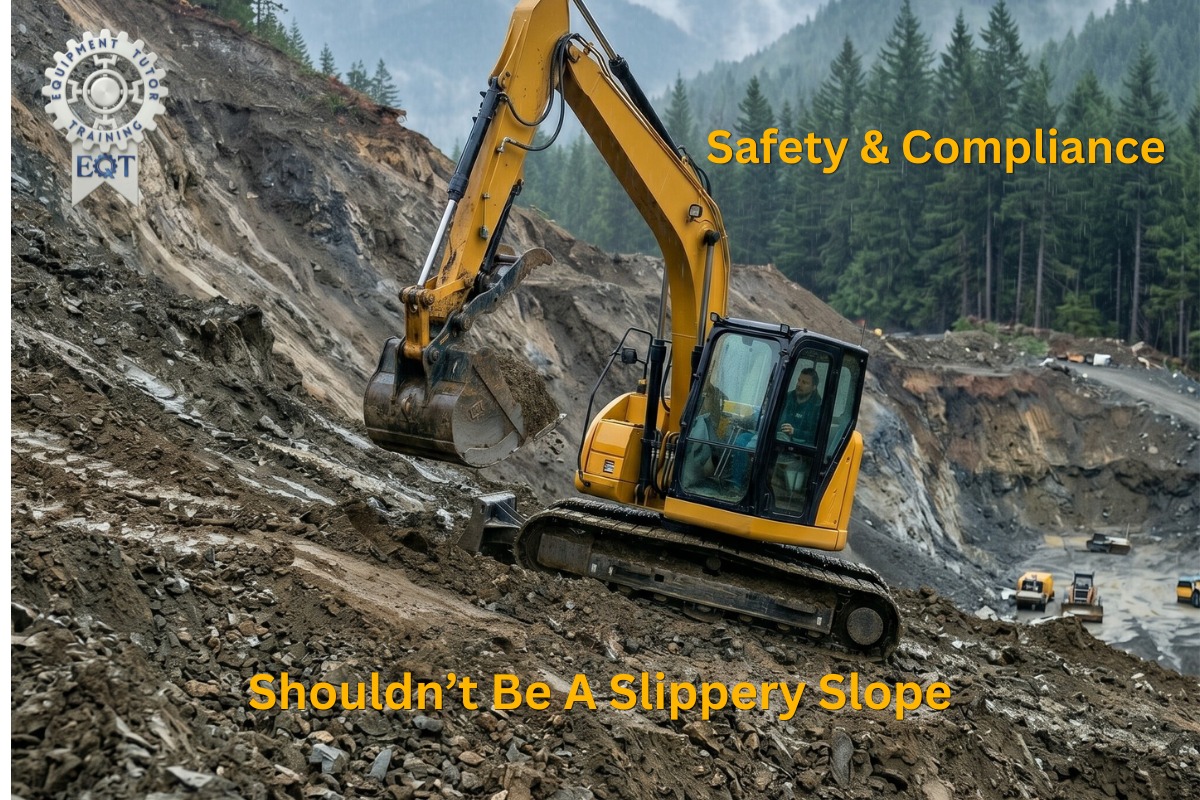
In the fast-paced landscape of 2026, the Canadian industrial sector is facing a critical realization: safety is not a static destination but a constant discipline. Across the country, from high-density infrastructure projects to complex logistics hubs, a quiet but dangerous phenomenon known as the normalization of deviance is being recognized as the primary threat to operational integrity. It is a subtle shift that threatens to turn safety into a slippery slope, where being good enough eventually leads to not being enough at all.
The insidious nature of this slippery slope isn’t paved with intentional negligence. More often, it is a gradual descent built on a foundation of seemingly minor compromises: a deadline that feels too tight, a minor rule that seems unnecessary, or a procedure that is simplified just this once. When these small deviations go unchecked, they push the acceptable threshold for risk slightly higher, slowly eroding the protective barriers designed to prevent disaster.
The Erosion of the Standard
The problem is that the edge is rarely static. What felt risky yesterday might feel routine tomorrow. The just once becomes the way we do things here. In any complex operation, whether it is a massive construction site, a bustling warehouse, or a long-haul trucking fleet, these incremental changes can combine to create a perfect storm.
Investigations into major incidents consistently reveal a tragic irony: catastrophic failures that seem sudden and shocking were often entirely predictable. They are frequently the final step in a long, documented chain of small compromises and overlooked deviations from established safe work procedures.
This creeping erosion is exacerbated by economic pressures and productivity demands common across all competitive Canadian industries. The temptation to prioritize speed over strict adherence to protocol is a constant pressure. However, treating safety as a cost center or a bureaucratic hurdle is the very definition of stepping onto that slippery slope. Real, sustainable safety requires a monumental shift, moving from a passive compliance checkmark mindset to a dynamic, proactive safety ecosystem.
The Audit Shield: A Proactive Trifecta
In 2026, a resilient business is one that builds an Audit Shield. This is a defensive posture that proves due diligence before an inspector even arrives. This ecosystem is built on a non-negotiable trifecta:
1. Ongoing, Verified Training The 2026 WorkSafeBC standard and other provincial regulators nationwide have moved past static, single-point-in-time training. Authorities now demand proof of ongoing competency. General knowledge isn’t enough when site hazards change. A ticket earned in 2018 does not reflect an operator’s ability to handle a modern, technologically advanced asset in 2026. High-quality training transforms an operator into a front-line safety inspector who understands the mechanical limits of their machine, such as soil stability or hydraulic pressure thresholds.
2. Rigorous, Data-Driven Maintenance A reactive approach to maintenance is a hallmark of the slippery slope. Real-world prevention involves proactive hazard recognition. When an operator is trained to identify the subtle signs of equipment fatigue, like hydraulic lag or engine sound changes, and reports them immediately, they stop a failure before it occurs. Digital verification of daily inspections is the absolute minimum, feeding into a comprehensive maintenance history that proves equipment is safe to operate in real-time.
3. Digital, Verifiable Compliance Records Handing an auditor a dusty binder full of faded paper records is no longer an adequate defense. In 2026, investigations move quickly from the mechanical to the administrative: did you take all reasonable steps to prevent this? An Audit Shield is built by moving records to a digital platform, creating a live, time-stamped, and irrefutable timeline. This proves that your safety culture is a living entity rather than a dormant file.
Closing the Accountability Gap
This approach is about more than just adding software; it is about administrative engineering. Digital compliance tools bridge the gap between policy and practice, creating a culture where safety isn’t a suggestion but a recorded, verifiable requirement.
This comprehensive, data-driven approach cannot be a grassroots effort. It requires a fundamental shift in leadership and a safety mindset from the top down. Executives and boards must understand that a robust safety program is about more than avoiding fines. It is about building a business resilient to risk, securing lower insurance premiums, and, most importantly, ensuring every single worker comes home safe.
The choice is clear: scrutinize your practices and question your assumptions today, or risk the slide tomorrow. The slope is already steep enough; we don’t need to make it any more slippery.
Simplifying the Standard with Equipment Tutor
Managing these moving parts can often feel like a secondary job for supervisors and safety officers, but it doesn’t have to be a headache. Equipment Tutor was designed specifically to remove the administrative friction that leads to compliance gaps. By automating training schedules, digitizing site-specific orientations, and providing a real-time Audit Shield dashboard, we turn a mountain of paperwork into a few simple clicks. We handle the backend complexity so your team can focus on the job at hand, knowing that your safety mindset is backed by irrefutable, time-stamped proof of due diligence.